What is a deepfake?
A familiar face or voice can feel like proof. A deepfake can make that instinct unreliable.
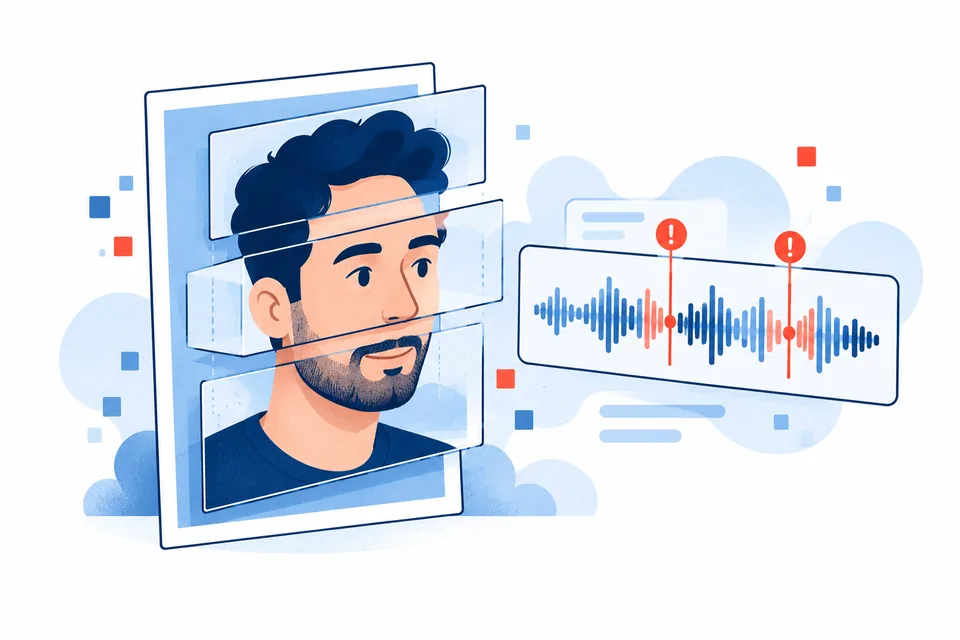
A deepfake is an image, video or audio recording made or changed using AI to imitate a real person. It can make someone appear to say or do something that never happened.
This guide explains the main types, how to check a suspicious message and what to do if you are the person being copied.
On this page
What can a deepfake look or sound like?
A fake image
A picture may place someone's likeness in a scene they were never in. It may look like a photograph even though the event did not happen.
A fake video
A video may replace a face or change movements so it appears that a person said or did something. An accompanying caption can add a false story.
A cloned voice
An audio clip or call may imitate someone's voice. For example, a scammer may pretend to be a colleague asking for an urgent payment.
The technology and its uses vary. The practical question is whether you can trust the content and the request attached to it. Police guidance describes deepfake-related harms including fraud, blackmail and harassment.
Is every edited image a deepfake?
No. Cropping a photograph, changing a caption or slowing a recording can also mislead people without using AI. A made-up post may falsely describe a real image.
You do not need to prove which editing tool was used before reporting harmful content. Explain what is false, who is being depicted and how it is being used.
Can you tell a deepfake just by looking?
Not reliably. Odd movements, inconsistent lighting or unusual speech may make you suspicious, but their absence does not prove a recording is genuine.
Avoid treating an online detector's score as a verdict. If the content affects a payment, someone's reputation or their safety, verify the underlying claim through a separate source.
Check the source, not just the pixels
Ask who first posted it and whether you can find the original context. A cropped repost gives you less information than the original publication. Several accounts sharing the same clip are not necessarily independent confirmation.
Verify urgent requests through another channel
If a voice asks you to transfer money or share a code, pause. Contact the person through a number or channel you already know, rather than the contact details supplied with the request.
In a workplace, use the normal payment approval process. A convincing voice should not replace it. If you cannot verify the request, do not act on it.
Are deepfakes illegal?
Not every use is unlawful. The content, consent, purpose and applicable law matter. A disclosed creative use is different from a fake used for fraud, abuse or harmful false allegations.
Sexual deepfakes raise particular concerns. In England and Wales, offences covering creating, or asking someone to create, fake intimate images of adults without consent came into force on 6 February 2026. The legal requirements still need to be assessed in each case. Sharing or threatening to share intimate images can also be criminal.
Do not apply those rules automatically to Scotland or Northern Ireland. Ask for advice relevant to the location and circumstances. Fake or altered sexual images involving children also raise serious criminal issues.
What if someone makes a deepfake of you?
Start by recording where it appears and reporting the harmful content through the relevant platform process. If there are threats, blackmail or safety concerns, contact the police.
Do not repost it to demonstrate that it is fake. That can give the material a wider audience. If you need to correct the record, consider a brief statement without embedding the content.
For an ordered action plan and intimate-image support, read Someone has made a deepfake of me: what can I do?
When is expert help useful?
Help may be useful when the content keeps reappearing, is affecting your work or forms part of wider abuse. Different specialists do different jobs: content specialists assess removal routes, lawyers advise on rights and remedies, and technical specialists may examine authenticity.
Before paying for a technical report, ask what decision it will help you make. You may be able to report a clear policy breach without first commissioning an analysis.
Find the right help for harmful fake content
Answer five anonymous questions to see relevant specialists. Choose one and request an introduction. We will approach the relevant team and check whether they can help.
RR's matching and introductions are free. Professional work is priced separately. No specialist can promise that every copy will disappear.
Get matched for harmful content help
Compare content removal specialists
Frequently asked questions about deepfakes
Can a deepfake be audio only?
Yes. A copied voice may be used without any video or image.
Does a convincing video prove something happened?
No. Check its source and context, and seek independent confirmation before acting on a serious claim.
Does reporting require proof that AI was used?
You can report the harm and explain what is false without identifying the software. The platform or investigator may ask for more evidence as it assesses the report.